Area Rug Size Guide: How To Choose The Perfect Rug
Choosing the wrong size rug is one of the most common decorating mistakes, and it instantly makes a room feel off. This post guides you through selecting the right rug size for every room, including standard rug sizes, furniture placement tips, and visuals to help you find the perfect fit.
When I first started decorating, I remember shopping for a living room rug and instantly feeling overwhelmed by the price tags. I ended up going with a 5×7 because it was way cheaper, and I quickly learned that was a big mistake. A 5×7 rarely works in any space (hence the low price tag), and living with a too-small rug made the whole room look off. Ugh, rookie mistake.

That’s when I realized rug size is just as important as the style or color. The right rug size anchors your furniture, defines the seating area, and makes a room look complete. I’ll walk you through the best rug sizes for every room, with plenty of tips and examples to help you avoid the same mistake I made all those years ago.
Standard Rug Sizes (Quick Reference)
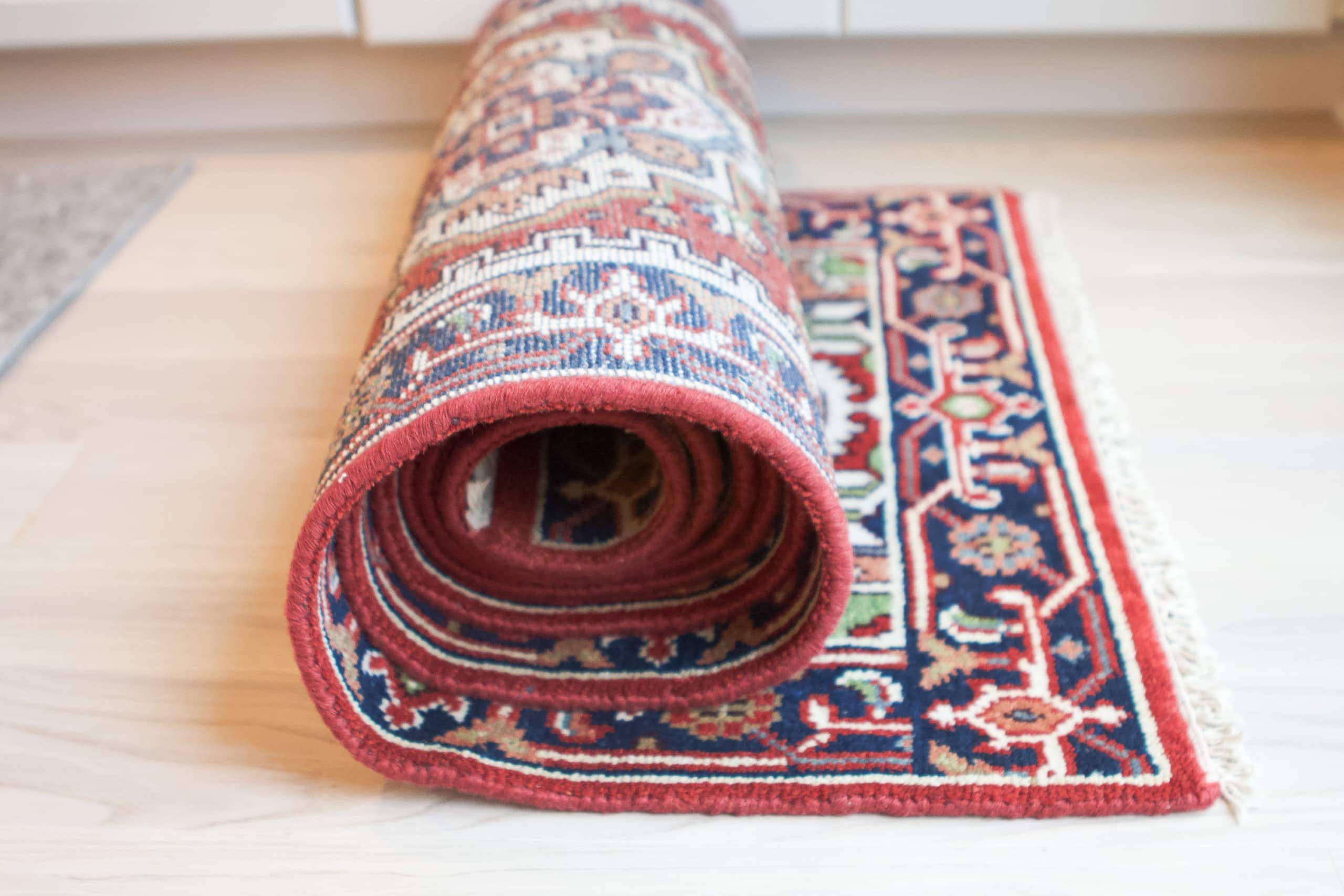
Before we dive into each room, let’s start with the standard rug sizes you’ll see most often when shopping. Knowing these dimensions gives you a baseline for what’s considered the right area rug size in most homes.
- 5×7 or 5×8: Works for entryways, home offices, or in small bedrooms. A smaller rug like this rarely works for a living room.
- 6×9: Could work for a home office or small living room.
- 8×10: The most versatile option. This size usually works under a queen bed, a dining table for six, or in a medium-sized living space.
- 9×12: Perfect for larger rooms, open floor plans, or under a king bed. This size anchors a full seating area with all furniture legs on the rug.
- 12×15: A splurge-worthy size for expansive living spaces or a large sectional sofa. Creates a polished, cohesive look.
- Runners: A great way to add warmth in high-traffic areas like hallways or kitchens.
- Round rugs: Ideal for entryways, under a round dining table, or in smaller spaces where you want a softer shape.
If you’re feeling stuck on style, color, or what type of rug works best for your space, check out my full Area Rug Buying Guide, where I break down materials, patterns, and durability.
How to Orient a Rug
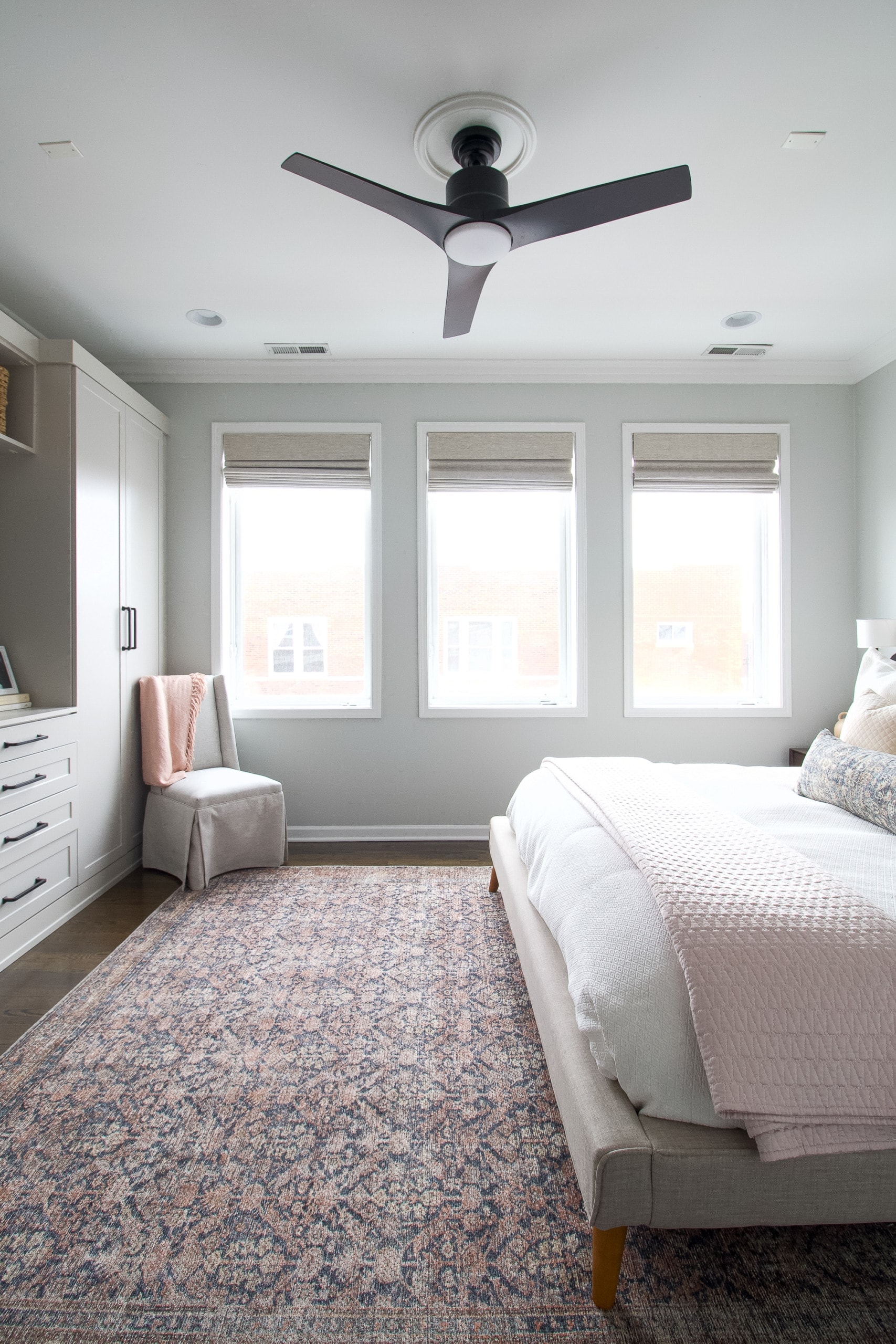
Once you’ve chosen the right rug size, the next step is making sure it’s placed correctly in the room. Orientation affects not just the furniture layout, but also how the entire room feels.

- Follow the room’s shape: In long, narrow rooms, orient the rug lengthwise so it runs parallel to the longest wall. This creates balance and helps the space feel more open.
- Anchor your furniture groupings: Center the rug around the main seating area rather than just plopping it in the middle of the room. The rug should connect to the furniture, not float away from it.
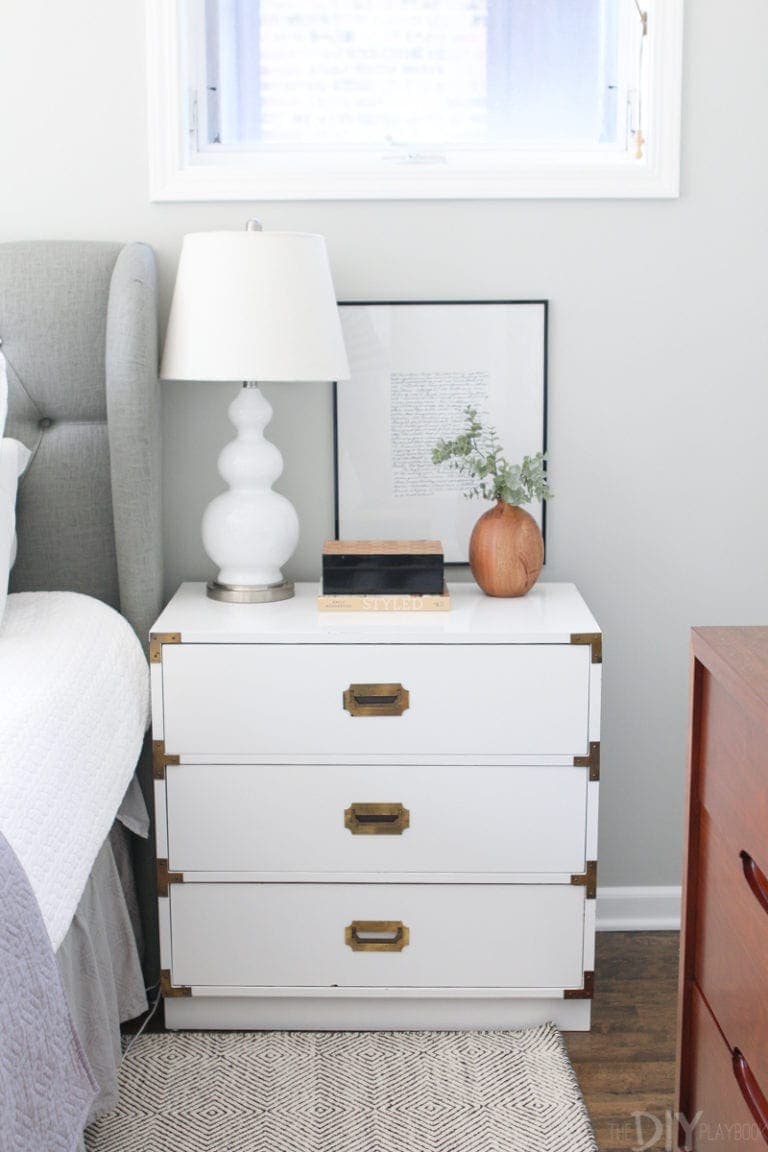
- Bedroom placement: Position the rug so that it extends beyond both sides of the bed and at the foot of the bed. This is the standard setup that makes the room feel polished and gives you a soft landing every morning.
Living Room Rug Size Guide

The living room is the space where rug size matters most. It’s usually the largest rug in your home and sets the tone for the entire seating area. The right area rug size will anchor your furniture, create a cozy conversation zone, and make the whole room feel cohesive.

Here are some guidelines to follow:
- All legs on: In an open floor plan or a large living room, choose a rug big enough for all of your furniture legs — sofa, chairs, accent tables — to sit fully on the rug. This helps define the conversation area and keeps the room from feeling scattered.
- Front legs on: In a smaller living room or when furniture is pushed against walls, it’s fine to have just the front legs of sofas and accent chairs on the rug. This still ties the furniture layout together while keeping costs in check.
- Size matters: A 5×7 rug almost never works in a living room. Even a 6×9 can look undersized unless the room is very compact. For most spaces, an 8×10 living room rug is the minimum, and a 9×12 is often the best way to fill the space.
- Spacing: Make sure your rug extends 6-10″ off each side of your sofa.
- Sectional sofas: For sectionals, make sure the rug covers the entire span of the sectional with at least the front legs on the rug.
If you fall in love with a rug that doesn’t come in the exact size you need, consider layering it over a larger, neutral rug (like jute or sisal). It’s a great way to get the look you love while still covering enough space.
Dining Room Rug Size Guide
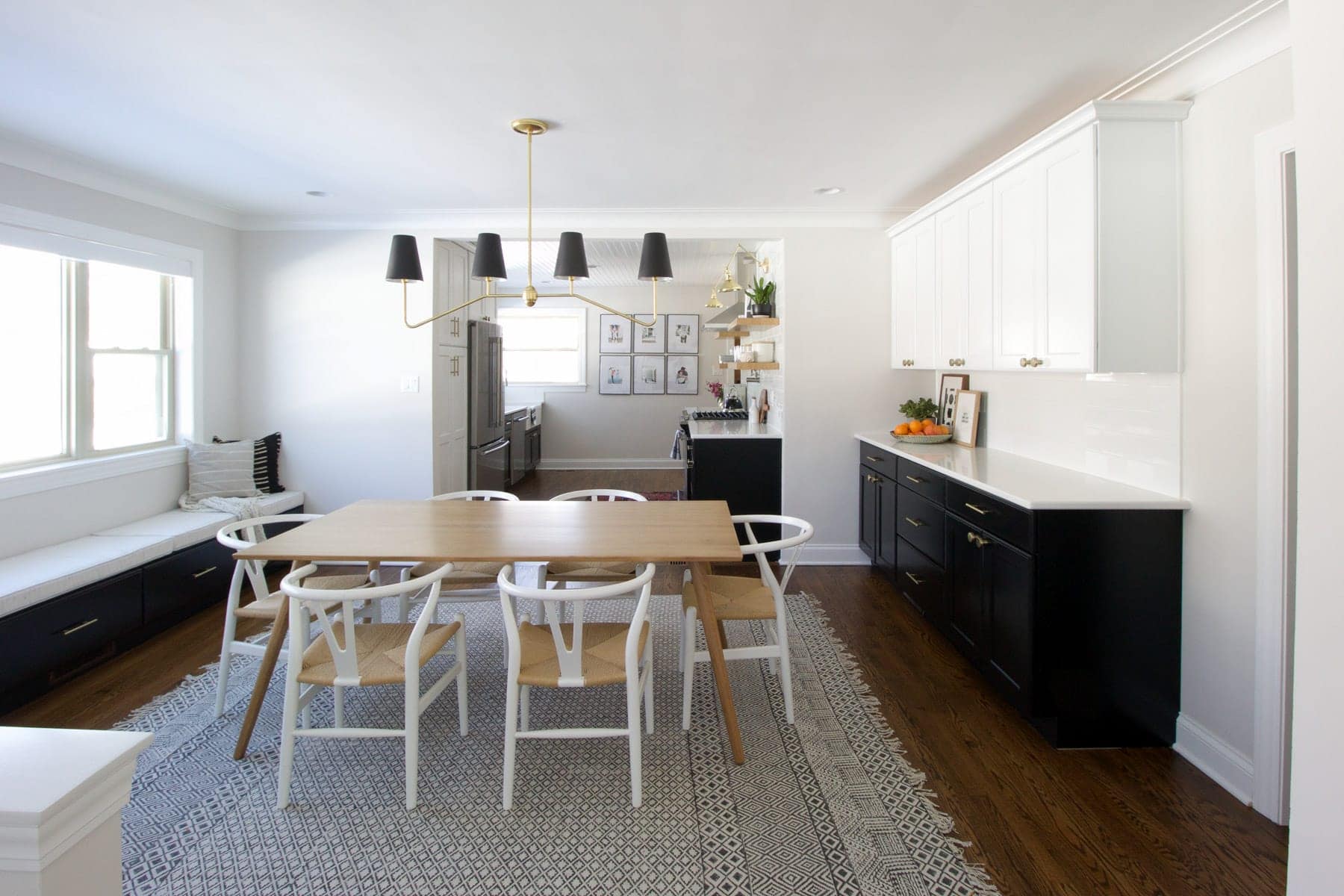
The dining room is one spot where the wrong rug size becomes obvious fast. If the rug is too small, the chair legs scrape against the edge every time someone pulls out their chair. The right rug size will keep your dining room comfortable, functional, and stylish.

Here are some guidelines:
- Extend beyond the table: The rug should reach at least 24 inches past the edge of your dining table on all sides. This ensures that when you pull out a chair, all four chair legs stay on the rug.
- Standard setup: A rug that’s too small makes a dining room feel cramped. In most cases, an 8×10 rug works under a standard 6-seat table, while a 9×12 is ideal for a larger dining room table that seats 8 or more.
- Round tables: If you have a round dining table, pair it with a round rug that’s big enough so the chairs stay on when pulled out. It creates a soft, balanced look.
- Room size matters: Always measure your room size before buying. You want enough space so the rug frames the table and chairs but doesn’t bump right into the walls. Leaving at least 12–18 inches of bare floor around the rug keeps the room looking intentional.
- Best way to test: Use painter’s tape to outline the rug size on your floor before ordering. It’s the easiest way to visualize the perfect fit without guessing.
Go with a flatweave or low-pile rug in the dining room. It’s easier to clean, chairs slide more smoothly, and crumbs won’t get trapped. Washable rugs are also a great option for high-traffic areas like this.
Bedroom Rug Size Guide

Bedrooms can be tricky when it comes to rugs because the bed takes up so much floor space. The right rug size will frame the bed beautifully, give you a soft spot to land in the morning, and make the whole room feel more balanced.

Here are some general guidelines:
- Queen Bed: An 8×10 rug is usually the perfect size rug for a queen. It should extend 18–24 inches beyond both sides of the bed and at the foot of the bed, leaving enough room to step onto it comfortably.
- King Bed: For a king, go bigger with a 9×12 rug. This ensures the rug frames the bed properly and leaves plenty of coverage at the sides.
- Twin Beds: For a small bedroom with a twin-sized bed, you can often use a 5×8. In kids’ rooms or guest rooms with two twin beds, try a runner rug down the middle or a 9×12 rug with both beds entirely on top.
- Furniture placement: The rug should sit about halfway under the bed, starting at the nightstands and extending out beyond the foot of the bed.
Hallways, Kitchens & Runner Rugs
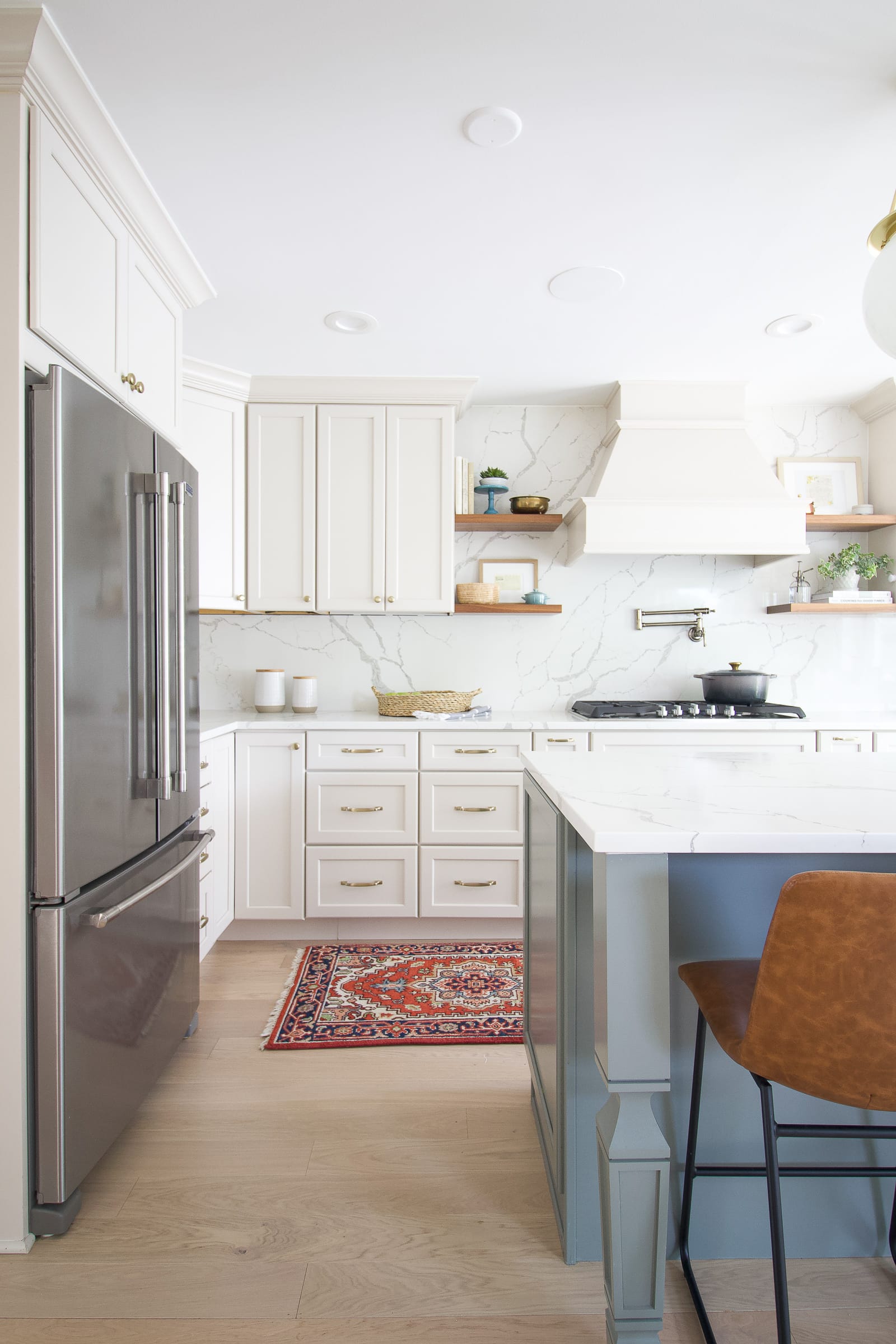
Runners are the easiest way to bring style and comfort into high-traffic areas like hallways, kitchens, and even small bathrooms. The key is choosing the right length so it fits the space without looking awkward.
- Hallways: Leave a few inches of flooring showing on either side of the runner. The rug should feel centered, not wall-to-wall.
- Kitchens: A runner between the sink and island adds comfort while cooking and defines the space. Washable rugs are a great option here.
- Small bathrooms: A runner or small accent rug in front of a double vanity can make the space feel warmer and more finished.
Common Rug Sizing Mistakes to Avoid
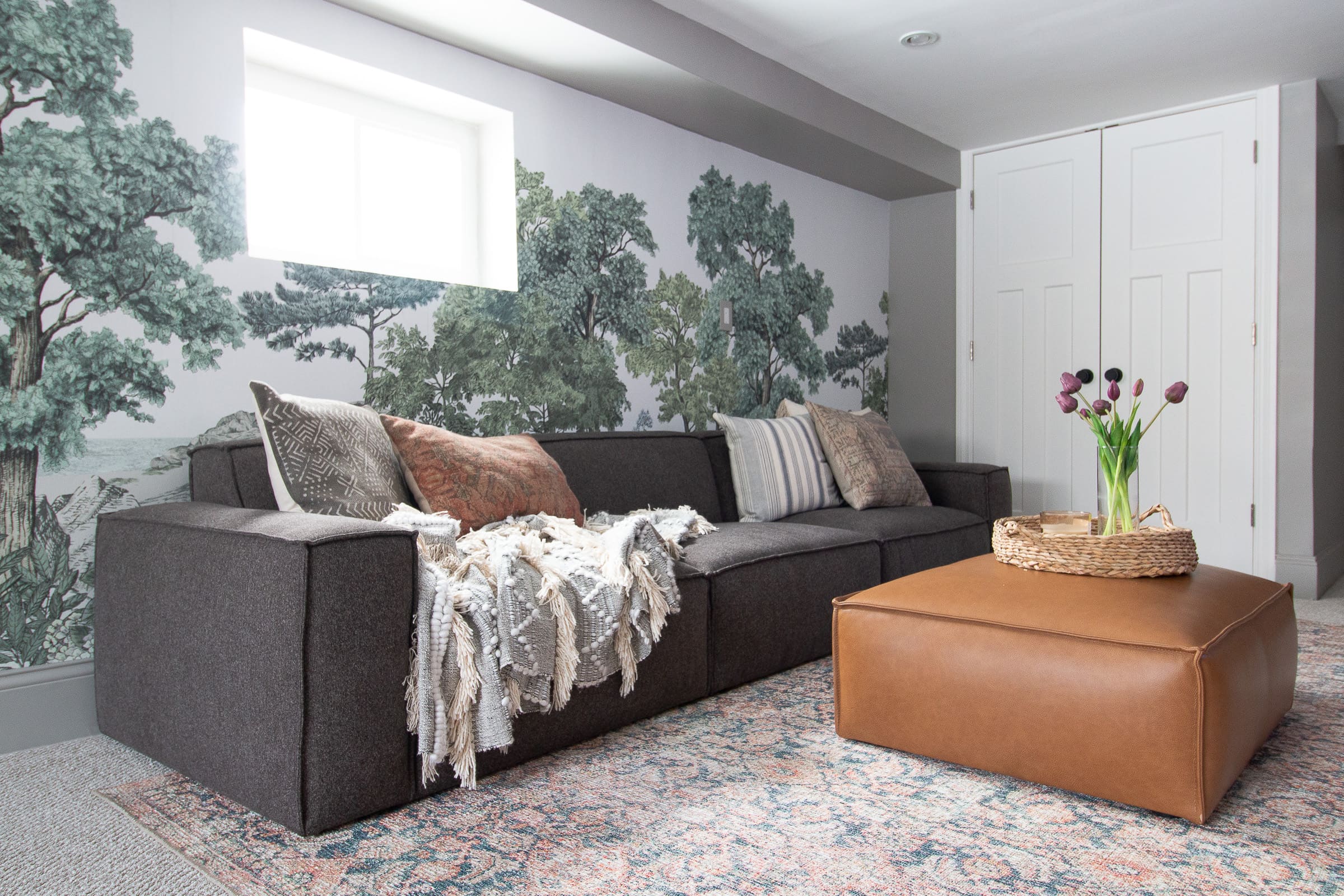
Even if you know the standard rug sizes and general rules, it’s easy to make small mistakes that throw off the entire room. Here are the most common rug sizing mistakes I see, and how to avoid them:
- Choosing a rug that’s too small: I know I’ve already said this 10 times already, but here it is again. A smaller rug almost always makes the room look unfinished. When in doubt, go for the larger rug — it’s the best way to achieve a cohesive look.
- Placing rugs against the wall: An area rug should never touch the wall. Leave at least 12–18 inches of bare floor between the rug and walls for balance.
- Forgetting a rug pad: A rug pad is worth the investment. It keeps the rug in place, adds cushion, and protects hardwood floors. This is the rug pad we use throughout our entire home.
- Layering gone wrong: If you fall in love with a rug that’s too small for your room size, layer it over a neutral base rug (like jute or sisal). It’s a great way to make a smaller rug work without sacrificing style. You can even layer an area rug over carpet. It’s a great way to add color, pattern, or texture to a space that might otherwise feel flat.
- Not measuring first: Eyeballing it is the fastest way to end up with the wrong size. Always measure your furniture layout and tape off the rug placement on the floor before you buy.
Final Takeaway: When in Doubt, Size Up

Choosing the right rug size can feel intimidating, but once you know the rules it becomes a lot easier. Think about your furniture layout, measure carefully, and remember the good rule of thumb: when in doubt, go bigger. A rug that’s slightly too large almost always looks better than one that’s too small.
And if you still need help with picking colors, patterns, or the type of rug that works best in your home, head to my full Area Rug Buying Guide for all my tips on style and material.