Homeowner Essentials – Tools Everyone Should Own
Want to build your first tool collection, but not sure what to add? I’m here to help! Here are the basic tools that every homeowner should have in their toolbox.
When Finn and I first moved in together in 2010, I’m pretty sure we didn’t own any tools. Well, we might have had one of those mini screwdrivers that we kept in our junk drawer, but that was about it!
Now that we’re on our second home, we’ve built up a solid tool collection over time. It didn’t happen overnight. Instead, as we would tackle a home improvement project, we’d research the right tools and gradually add them to our toolbox.
Over the years, I’ve received countless questions about essential home tools, so I wanted to put together this one-stop guide. Whether you’re a new homeowner or have lived in your home for years, having the right set of tools will make all the difference for large home repairs and minor repairs.
These are the must-have tools that EVERYONE should keep in their home. Even if you’re a renter, I think you should own most of these basic tools. What do you do when the faucet is leaking at midnight and your landlord is unavailable? That’s when you reach for your adjustable wrench!

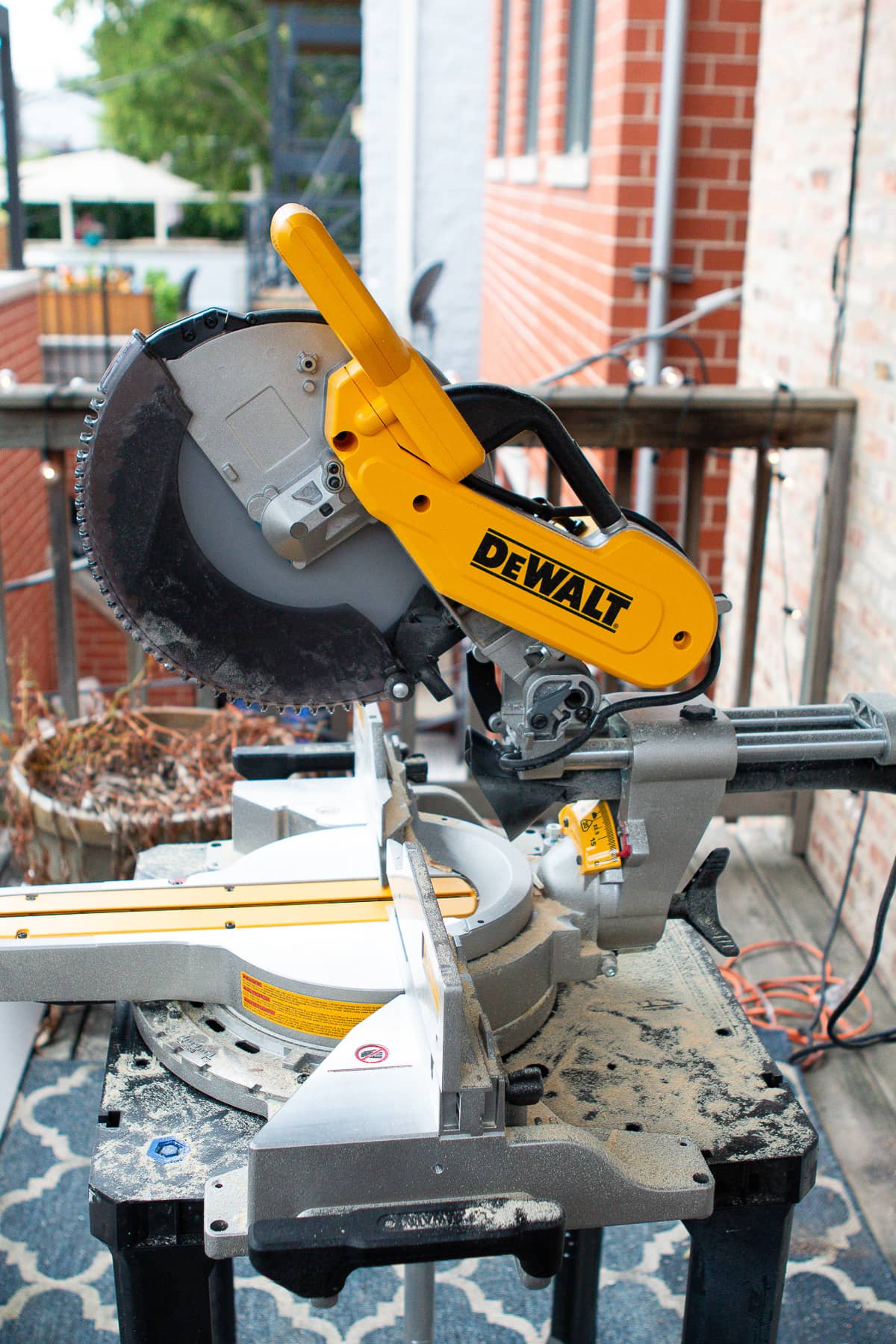
We’ve eased into the world of power tools over the years, slowly adding to our collection. In this Power Tools 101 post, I dive into which tools you should invest in, when you should rent vs. buy tools, and the best DIY projects for each one.
Today’s post will just focus on the essentials. I’m hopeful that you’ll walk away from this post with a lot more DIY swagger and the confidence to take on a few projects in 2025. I mean, that’s why we’re all here, right?!
Essential Tools for Home

Before I dive into the details, here’s a complete list of essential tools every homeowner should own:
- Tape Measure
- Multi-bit Screwdriver
- Flashlight
- Hammer
- Adjustable Wrench
- Hardware Kit
- Utility Knife
- Pliers
- Torpedo Level
- Stud Finder
- Allen Keys (Metric & Standard)
- Drill & Drill Bit Set
- Toolbox
25-Foot Tape Measure
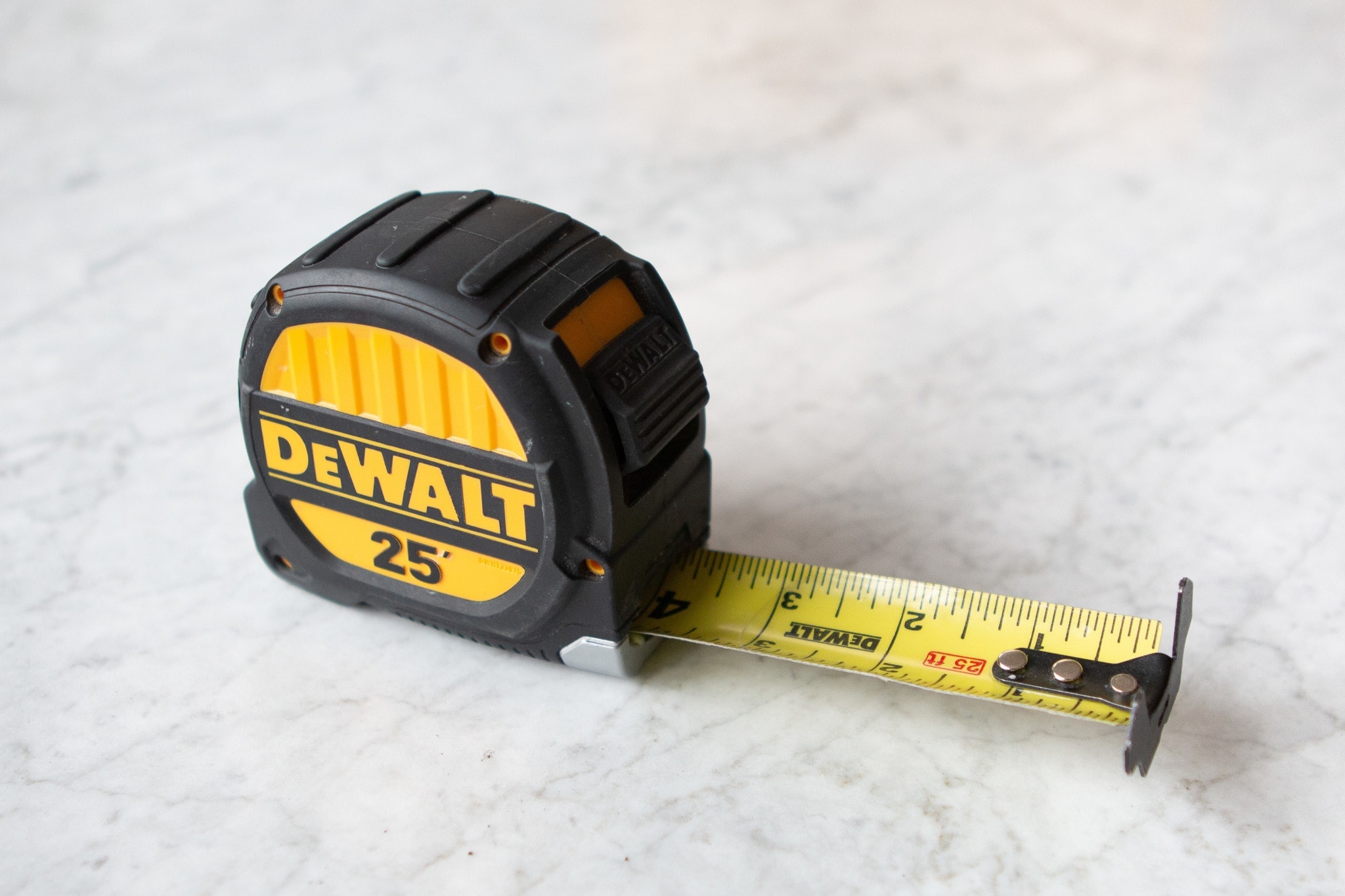
Even if you don’t consider yourself to be handy, whatsoever, you need to have a nice tape measure. I mean, how else do you figure out what size rug to buy for your room? Or whether that new chair will fit in the corner? Everyone needs a tape measure and you might as well get a good one. Look for one with a comfortable grip and a retractable blade that makes it easy to use.
I recommend one that is at least 25 feet in length, retracts, and has an auto-lock feature. We have a few of these because pretty much every DIY project calls for a tape measure and we like to have plenty on hand. I even keep a mini tape measure in my purse when I am out and about, shopping.
Bottom line, buy a nice tape measure and you’ll use it for years to come!
Screwdriver Set

A basic tool kit should always have both a flathead and a Phillips head screwdriver. Or better yet, buy a multi-bit screwdriver with one handle and multiple heads.
The flathead has, well, a flat head. (It’s also called a slotted screwdriver.) This screwdriver isn’t used quite as often as the Phillips-head screwdriver, but you’ll need it for some furniture assembly, installing outlet covers, and more.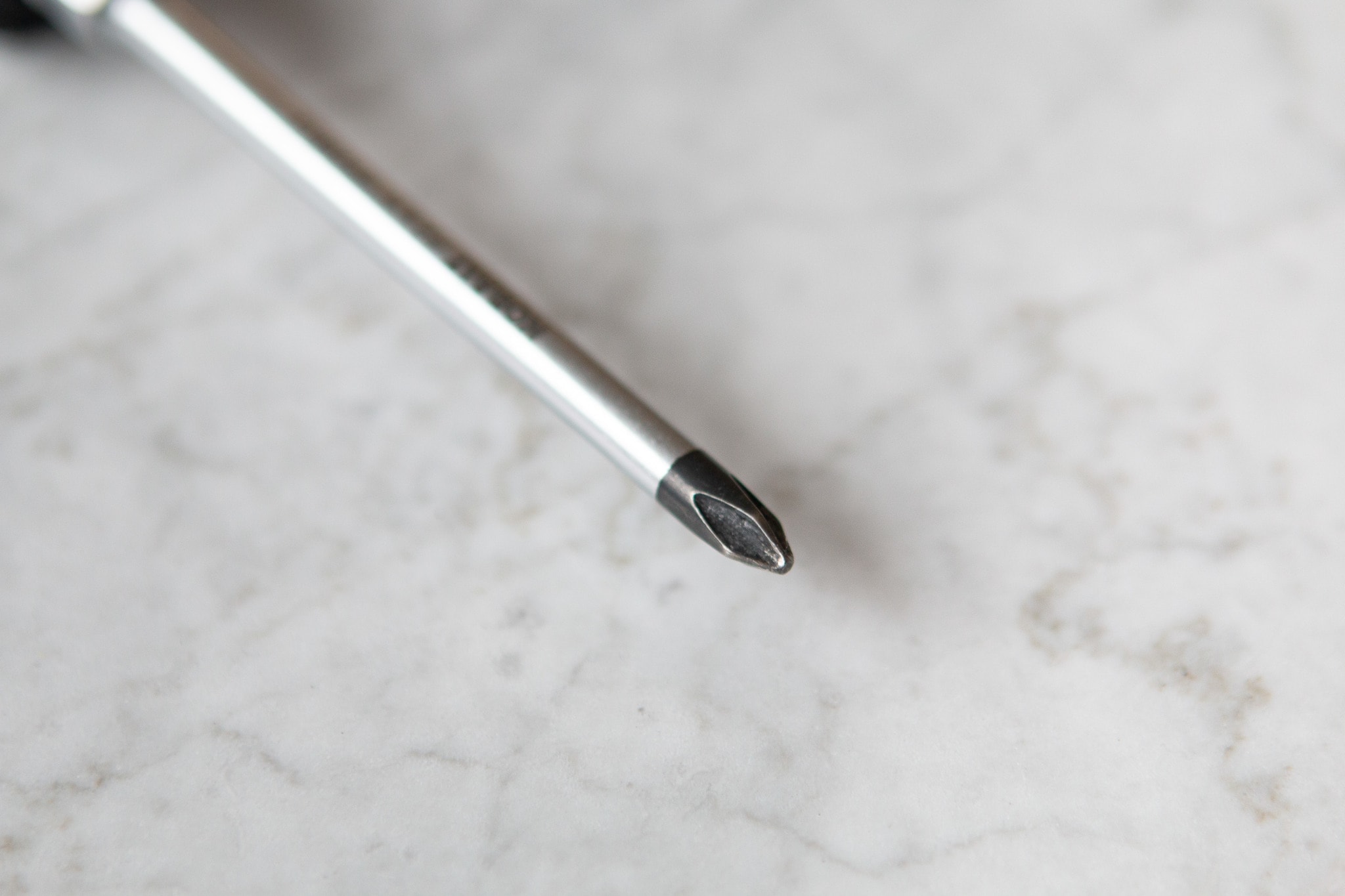
The Phillips screwdriver is named after the man who invented it, Henry F. Phillips. (Truth: I had to look that up, but I’m so happy to finally have that knowledge!) This one has a “+” sign on the end of it and is used for most projects. You’ll need one if you’re installing wall anchors, putting furniture together, tightening a doorknob, and more.
Flashlight
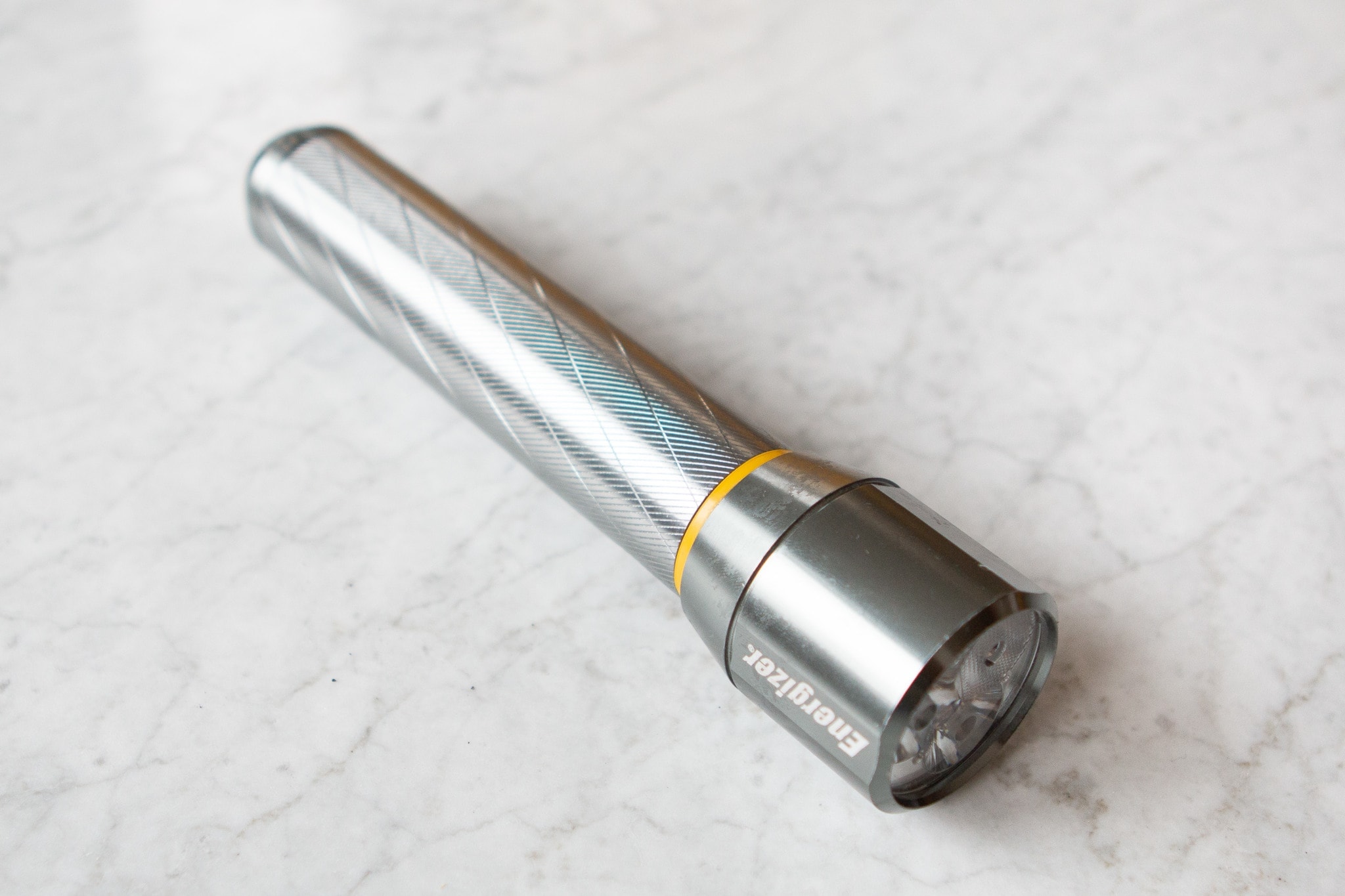
It might not seem like a “tool”, but it’s certainly a homeowner essential. When the power goes out, you need a flashlight on hand to head to the breaker box and get things back up and running.
Or at the very least, a flashlight is good for making shadow puppets on the walls and telling ghost stories. Just get one, okay? And make sure it has new batteries!
And while you’re adding it, buy another one for your home emergency kit!
Hammer
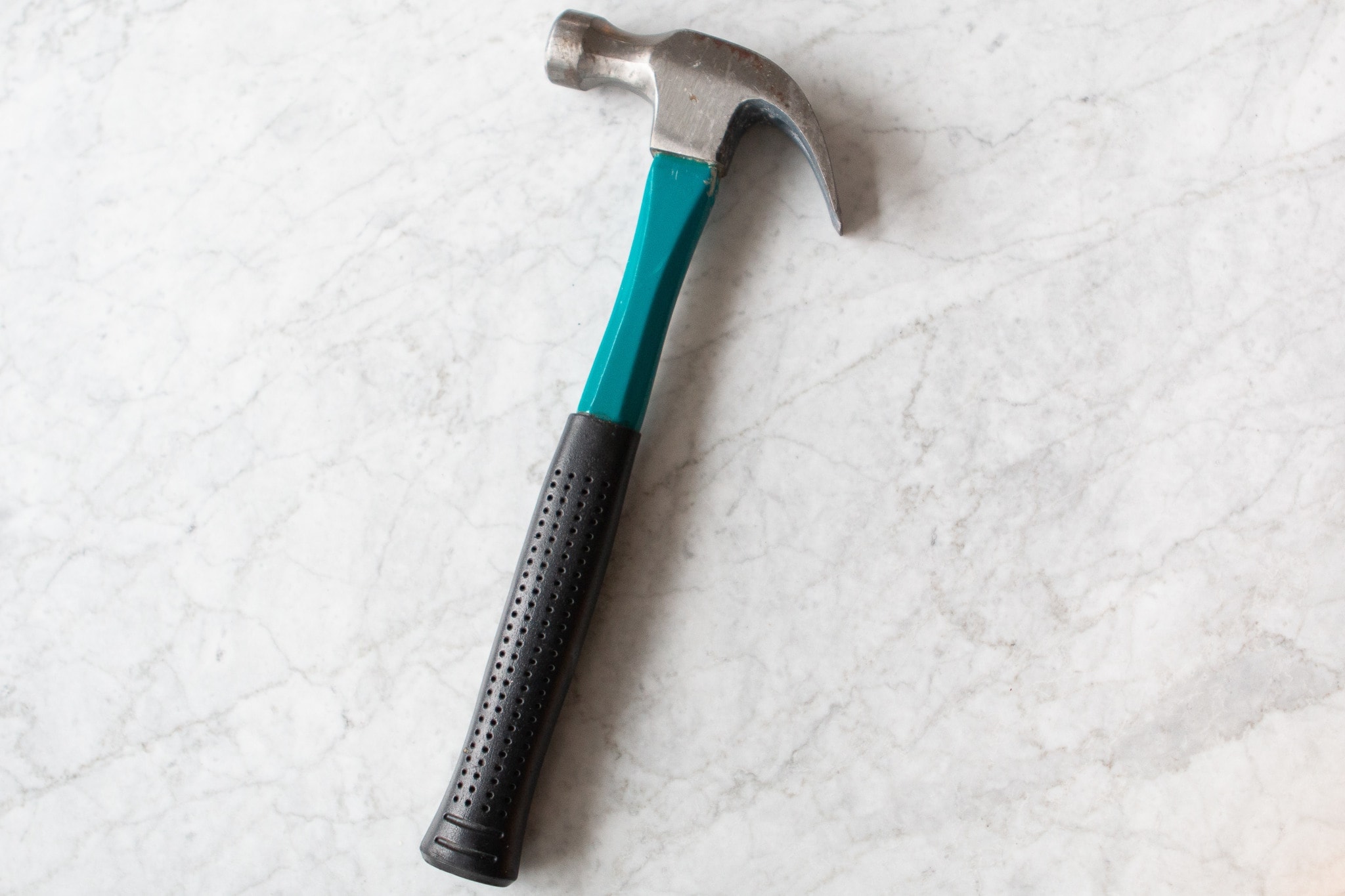
Growing up, my mom had this little toolkit called the “Do It Herself Toolkit.” Back then, I thought it was really cool and loved looking at the tools inside. Now, I’m actually pretty offended by the product. Everything in it is lightweight and miniature, assuming that women can’t handle larger tools. Plus, it’s all pink. Harrumph. Inside her “DIH” toolkit, she had this little tiny hammer that almost looked like a toy one.
Don’t buy a hammer like that. Buy a real hammer. A sturdy and heavy hammer. A quality hammer can make all the difference when it comes time to pound a nail into a wall. I recommend going with a medium-sized claw hammer (16 oz. is good) with a rip claw (that’s the pokey part on the back) and a grippy handle. This is a good hammer that would work well for any household.
Adjustable Wrench

You’ll need a wrench for plumbing issues, so everyone should always have one on hand. (What if you need to turn off the water quickly?!) I suggest opting for a medium-sized adjustable one that can work for a wide variety of projects. With this one, you can adjust the size to fit around various nuts and bolts.
You could also opt for a wrench set like this one so you always have multiple sizes on hand.
Hardware & Box

It’s crazy when I realize the number of nails, screws, and anchors we’ve accumulated over the years. Pretty much anytime we would go to the store we would pick up another box of them because back at home they were all a hot mess.
When we moved into our new house, we finally got all of our hardware organized in this big hardware box. Now we have just about every sized nail/screw/anchor on hand and we’re not running to the store five times before we start a project.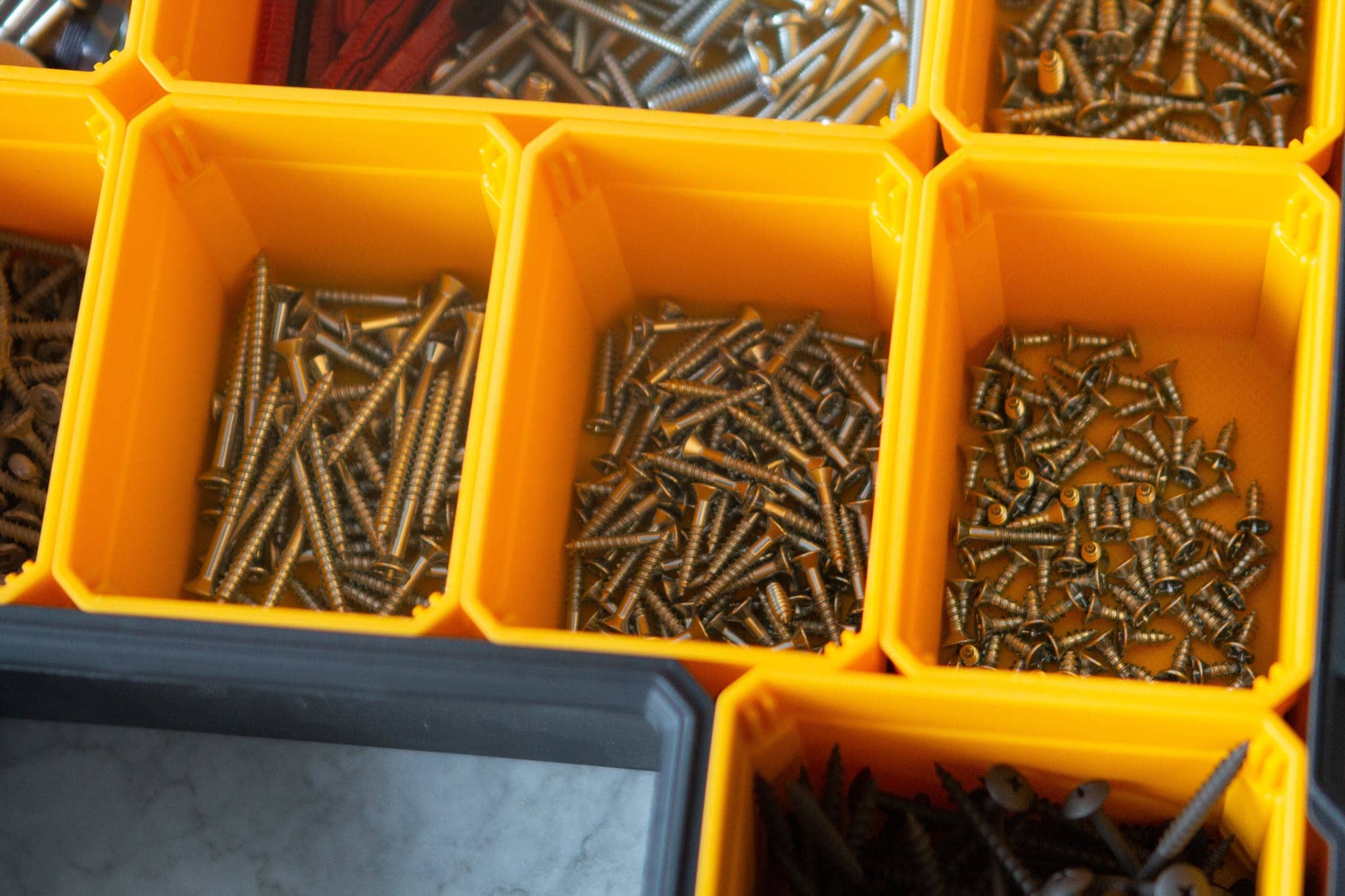
If you’re just starting, I would suggest buying a sample hardware box like this one. It has everything you need in a wide variety of sizes and it will come in handy when hanging pictures, shelves, hooks, etc. around your house.
Utility Knife (Retractable Blade)

We had a janky utility knife for years that was actually kind of scary to use. The blade was rusted and falling apart and I’m pretty sure we would need a tetanus shot if we cut ourselves with that thing.
Now we have this utility knife and it’s great! Even if you just use it to cut open your shipping boxes, you need a utility knife in your toolbox!
Set of Pliers
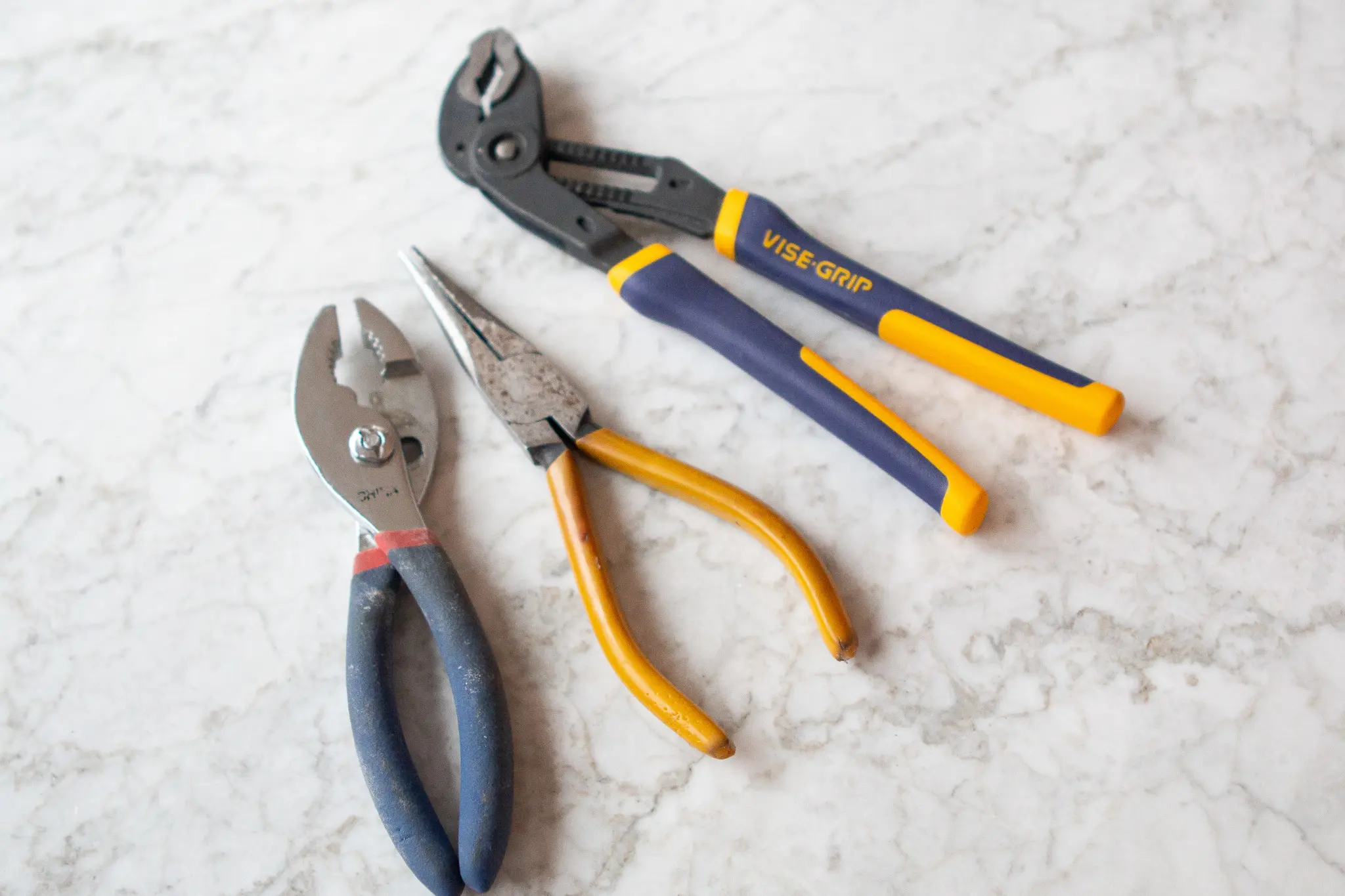
Pliers are used for gripping. There are a few kinds you might use, depending on the project, but I suggest having needle-nose pliers, slip-joint pliers, and channel-lock pliers on hand.
- Needle-nose are good for bending wires and smaller items.
- Slip-joint pliers and channel-lock pliers have curved jaws and pointed teeth and are used for lots of small home maintenance tasks around the house.
- You can also just pick up this plier set and you’ll be good to go.
Safety Gear
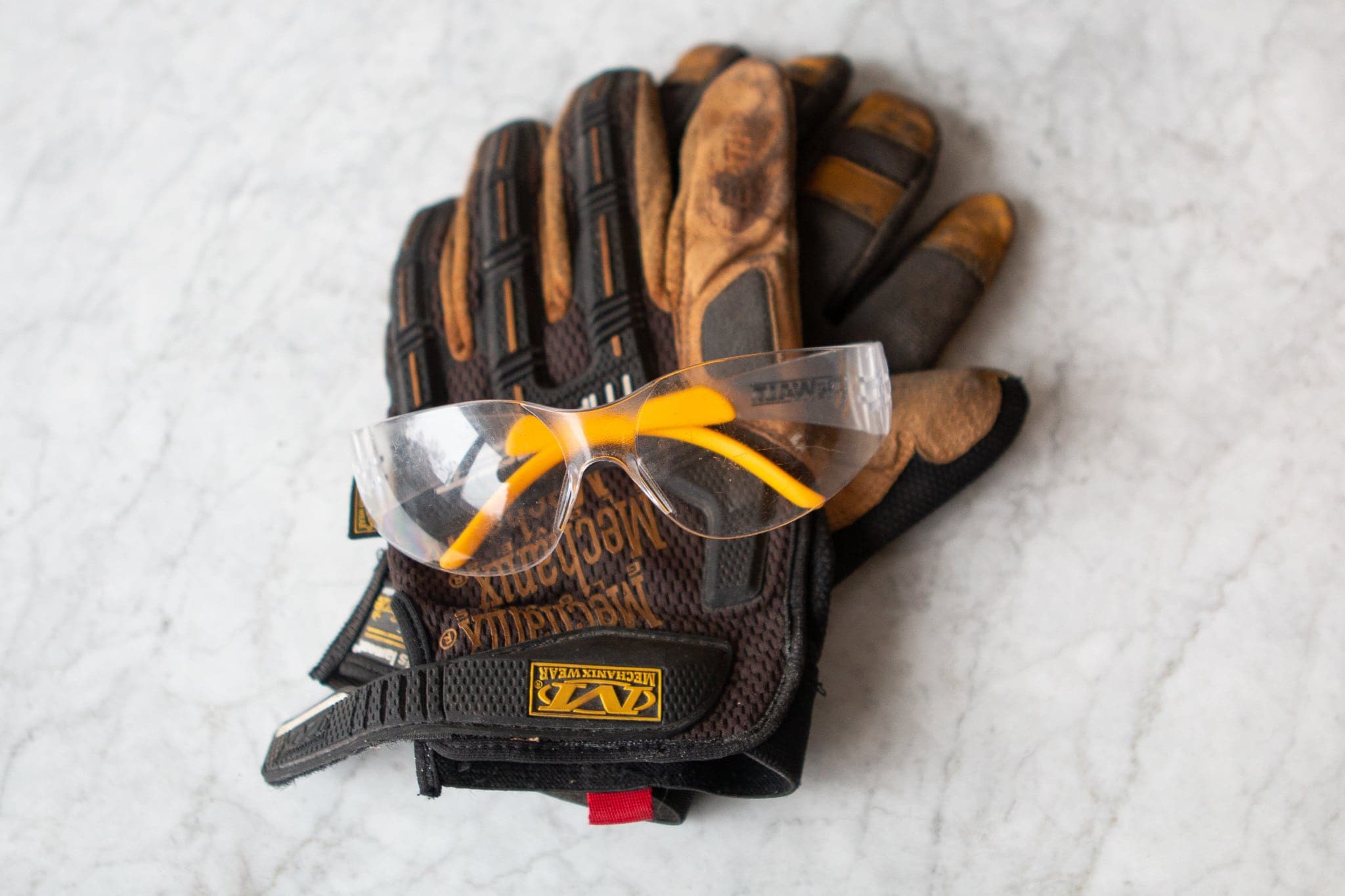
I couldn’t make a tool list without touching on the importance of safety. We always have safety glasses, work gloves, and face masks on hand for our DIY projects. Even if you’re doing something small around the house, wearing glasses and gloves will keep your eyes and hands safer.
Level
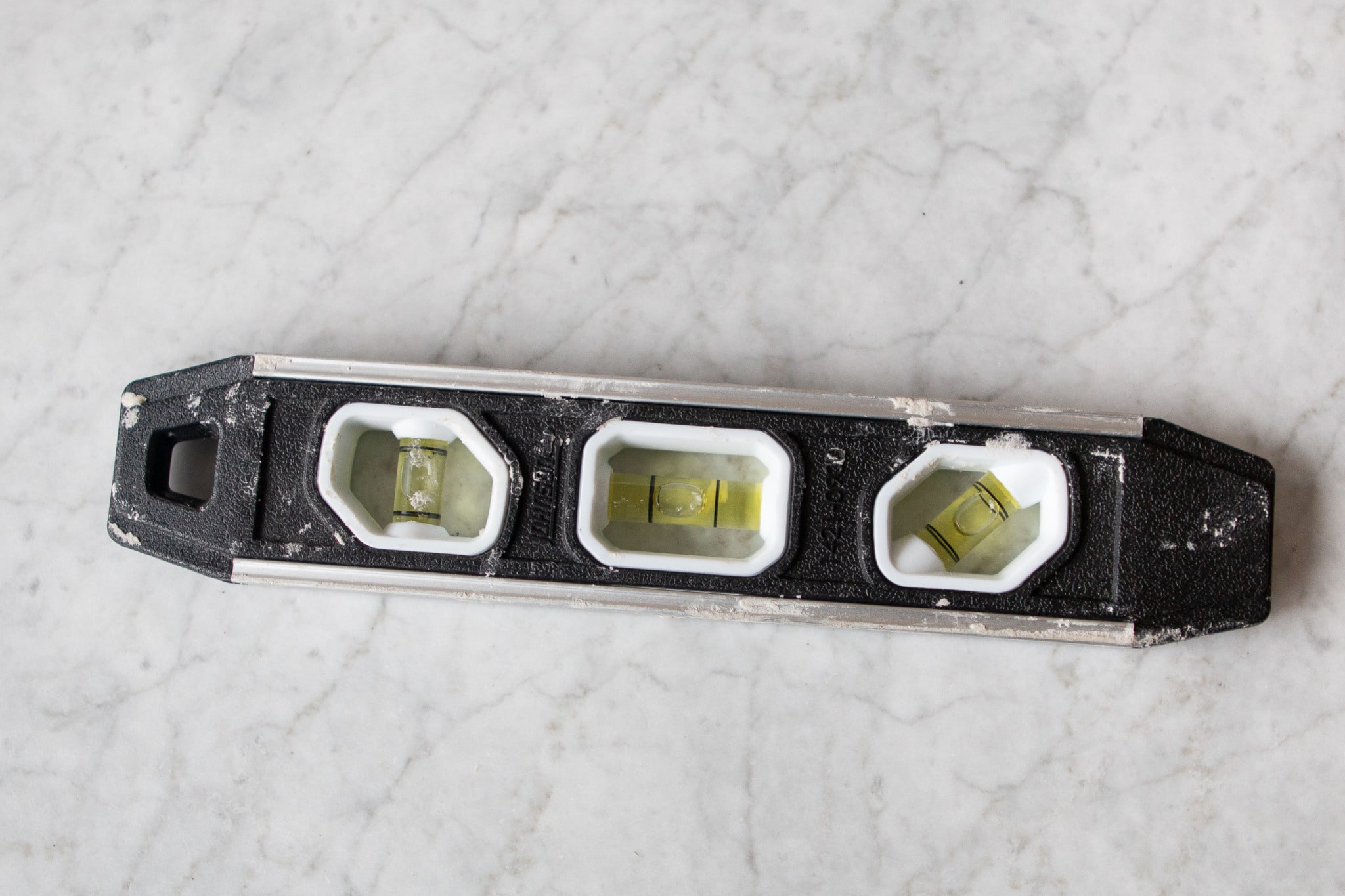
Man, I can’t even tell you the number of straight-edge levels we’ve gone through. We have small, medium, and large levels, but you can just start with a small torpedo level for everyday homeowner tasks.
The reason we’ve purchased so many levels is because I always use one for tiling – to make sure the tile is straight as I add it to the wall. I inevitably get thinset on it and when it dries, it makes the level, well…not level! Even if you’re just hanging picture frames on the wall, you’ll need a small torpedo level, so add it to your toolbox.
Stud Finder

If you hang anything on your wall, you should whip out your stud finder. It’s not the cheapest item on the list, but it certainly comes in handy.
Whenever I go to hang anything, I check to see if I can hit a stud. If not, I use anchors so it’s nice and secure. I’ve tried some of the knocking techniques on the wall, however, nothing does the job like a good stud finder.
When do you just use a nail or screw? When do you need an anchor? This article is an amazing resource that breaks down every kind of anchor on the market!
Allen Keys (Metric & Standard)
These L-shaped tools come in handy for furniture assembly, appliance repairs, bike repairs, and more. They come in two kinds of sizes – standard (inches) and metric.
We have a huge bag of Allen wrenches, but if I were starting from scratch, I would opt for a set that’s attached to a folding mechanism. That way all of the sizes are easily found in one spot!
Drill & Drill Bit Set

I know, I know – a power tool?! Isn’t that scary? Nope. A cordless drill tops my list of best tools for homeowners because it’s useful for just about any project. I know many of you might be intimidated at the thought of using a drill, but with a little bit of practice, the power drill can be your new best friend. It’s one of the most used tools in our home, that’s for sure.
I love this kit because it comes with a tool bag, charger, battery, and the drill itself. A drill is nothing without bits, so make sure you get a kit of those too!
I break down everything you need to know about using a power drill in this blog post. The post covers all of the basics so you can start using a drill with ease.
Tool Box
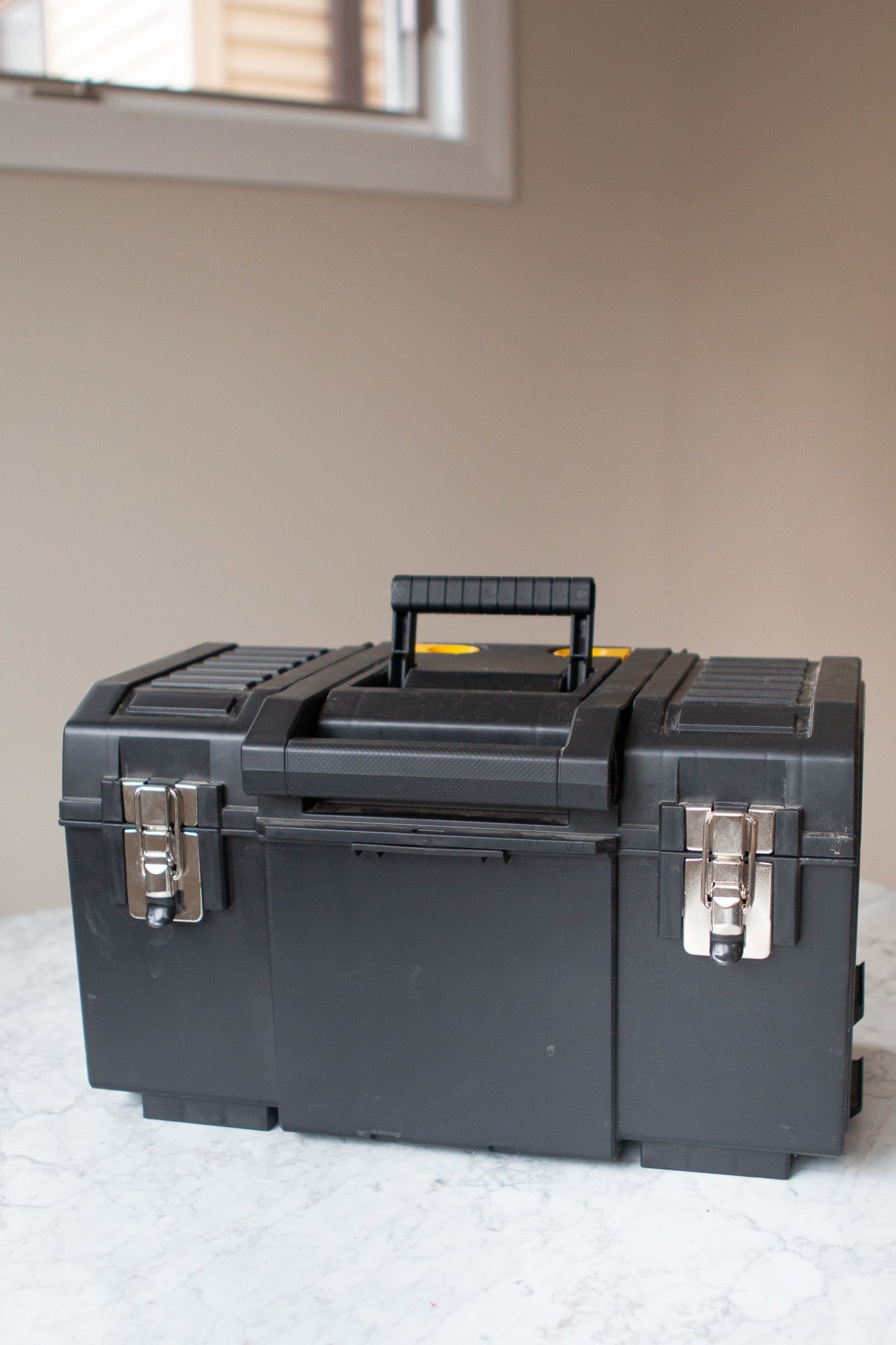
Obviously, you need somewhere to store all of these goodies and there are so many awesome toolboxes out there. Our tool collection has gotten so large that we have an entire tool chest, and then some, to accommodate all of our things.
If you’re a new homeowner who is creating your first home tool kit, one like this should get the job done!
Extra Credit: Your Home Playbook

I couldn’t finish this post without mentioning my digital guide, Your Home Playbook. If you’re a homeowner, it’s a wonderful resource to help you stay on top of all of the tasks that come with managing a home. I use mine constantly and I know thousands of you do too!
Is Your House Stocked?
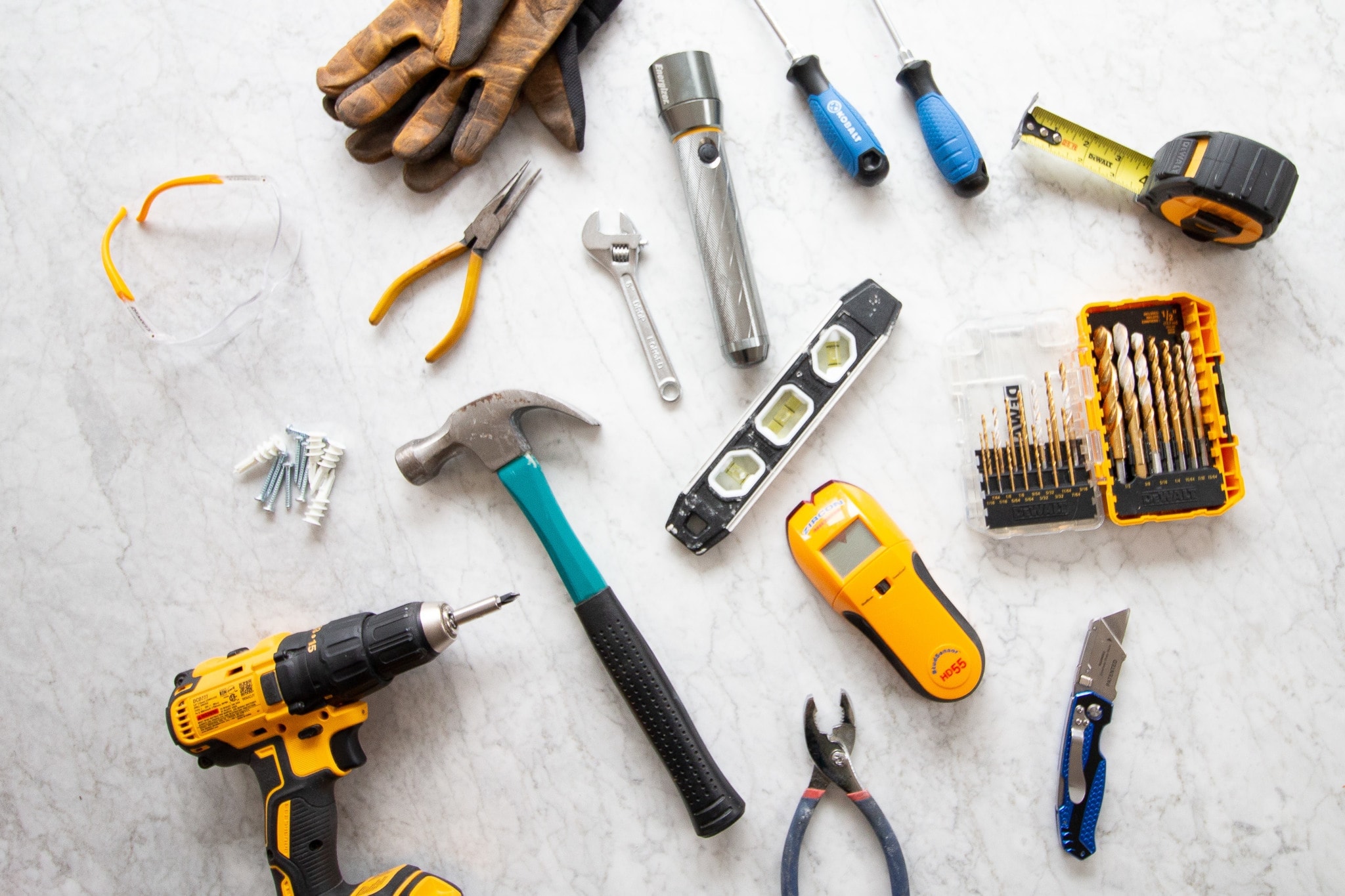
Now, do you have all of these tools on hand? Even if you’re not into DIY projects, having a well-stocked toolkit is essential for basic home maintenance and those inevitable “uh-oh” moments.
But please don’t feel like you need to buy everything at once. Start with the essentials—maybe a hammer, a screwdriver set, and a tape measure—and build your collection as you go. The best toolkits aren’t built overnight; they’re curated over time as new projects arise.
Invest in quality tools; take care of them, and they’ll last for years. Trust me, having the right tool on hand when you need it makes all the difference. A well-stocked toolkit isn’t just about home maintenance—it’s about confidence, independence, and the ability to tackle whatever comes your way.
Casey