Wood Stain Comparison Chart: Best Options on 4 Woods
Choosing the right wood stain can feel overwhelming when you’re staring at tiny swatches in the hardware aisle. That’s why I tested 7 popular stain colors on 4 common types of wood, so you can see exactly how each one looks before you commit to your next project.
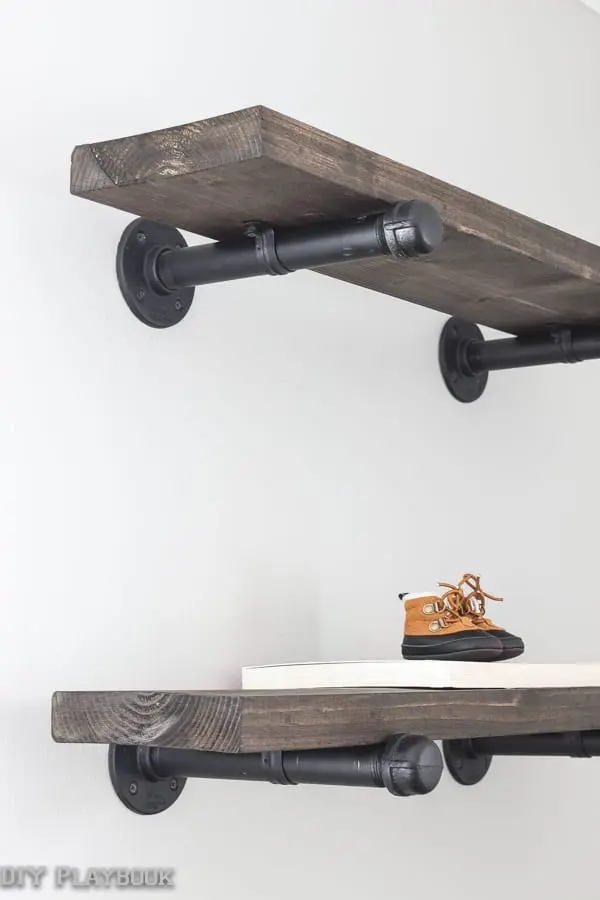
Over the years, I’ve taken on my fair share of staining projects — some that turned out beautifully and others I’d rather forget. Whether you’re staining a simple piece of DIY decor (like these simple wood shelves) or choosing a finish for your hardwood floors, one thing I’ve learned is that seeing stain colors in real life makes all the difference. That’s especially true because different species of wood accept stain in totally different ways.

So, I thought it would be fun, and super helpful, to test seven common stain colors on four of the most readily available woods available at any big box hardware store. No special orders, no fancy lumber — just the same pine, poplar, red oak, and “whitewood” you’d grab for a shelf project or weekend build.
Along the way, I’ll share my favorite staining tips, tools, and lessons I’ve learned over time to help you get the best results from your next project.
Comparison Chart: Wood Types & Stain Behavior

Before we jump into the stain results, let’s take a closer look at the four types of wood I tested. These are the ones you’ll find most commonly at big-box home improvement stores. They’re perfect for DIY shelving, trim, furniture builds, or small woodworking projects.
Each one has its own quirks when it comes to price, grain, undertones, and how it reacts to stain.
| Wood Type | Undertone | Characteristics | How It Takes Stain | Use Conditioner? |
|---|---|---|---|---|
| Pine | Yellow | Soft, knotty, inexpensive | Blotchy without prep; takes light/dark well | ✅ Yes – highly recommended |
| Poplar | Green/Gray | Smooth grain, mid-range price | Can look muddy with light tones; great dark | ✅ Yes – for even results |
| Red Oak | Red/Pink | Hard, strong grain, durable | Absorbs evenly; enhances grain beautifully | ⚪ Optional – less critical |
| Whitewood | Light Yellow | Budget-friendly softwood | Inconsistent without conditioner | ✅ Yes – improves finish |
Why I Use Wood Conditioner

Before staining, I applied a coat of pre-stain wood conditioner to each board. This simple step helps prevent blotchiness and uneven absorption, especially on softer woods like pine, poplar, and whitewood. While it’s optional on hardwoods like oak, I’ve found it still helps achieve a smoother, more consistent finish.
To use it, just sand your wood smooth, brush on a thin coat of conditioner (I use a rag), let it sit for about 10–15 minutes, then wipe away any excess. Be sure to apply your stain within two hours for the best results.

In the photos above, you’ll see a side-by-side comparison for each stain color — one half with conditioner and one without — so you can decide if it’s worth the extra step for your project.
Testing 7 Colors of Stain

I’ve accumulated a lot of little jars of stain over the years and went to my stash to see what colors I already had on hand. Unsurprisingly, I had plenty for this little test. Here are the seven stains I landed on:
- Varathane, Weathered Oak
- Minwax, Classic Gray
- Minwax, Golden Oak
- Minwax, Driftwood
- Minwax, Provincial
- Varathane, Dark Walnut
- Minwax, True Black
I don’t have a strong preference between brands. I usually choose based on color. Most of these are semi-transparent stains, which means they add color while still letting the wood grain show through. That’s why you’ll see the undertones of each wood species peeking out a bit differently in every test board.
How To Apply Wood Stain & Top Coats

This is my go-to method when it comes to staining wood. I dip a lint-free rag into the stain, brush it across the grain in one steady motion, and immediately wipe off the excess. You don’t need to layer on too much product; a single, even sweep prevents the finish from feeling tacky and helps you see the natural beauty and texture of the wood.
I didn’t use a topcoat for the testing, but if you want to protect the wood finish, it’s a great idea. A water-based topcoat is my go-to for most DIY projects because it dries quickly, has little odor, and keeps the color of the wood stain true to tone. (It won’t amber or yellow over time like oil-based options sometimes do.) Here’s how you apply it.
- Make sure your stain is completely dry. I would let it dry overnight.
- Lightly sand the surface with 220-grit sandpaper to knock down any raised grain, then wipe away dust.
- Using a high-quality synthetic brush, foam brush, or foam applicator pad and apply a thin, even coat in the direction of the wood grain.
- Let it dry for 1–2 hours, then lightly sand again before adding a second coat for extra protection.
- Avoid over-brushing; water-based finishes dry fast, and too much brushing can leave streaks.
Okay, now let’s get to the color testing!
Poplar Wood: 7 Stains Compared

Poplar is known for its subtle green/gray undertones, and that really shows up when you use lighter stain colors. Weathered Oak, Classic Gray, Golden Oak, and Driftwood barely added any depth — the color mostly sat on top and let the green undertone come through. Provincial did a little better, but still read uneven and a bit muddy.
Once I moved into the darker stains, though, Poplar totally redeemed itself. Dark Walnut and True Black looked rich, even, and way more professional – almost like an entirely different species of wood. If you’re trying to disguise Poplar’s natural undertone, deeper stains are absolutely the way to go.

Best stains for Poplar: Dark Walnut, True Black
Stains I’d skip: Anything light or washed out. They don’t take well and don’t give enough payoff
Whitewood: 7 Stains Compared

Whitewood is one of those mystery “budget boards” you’ll find in the lumber aisle — usually spruce, fir, or hemlock — and it has light yellow undertones with a soft, sometimes streaky grain. Just like pine, it doesn’t always absorb stain evenly, especially with lighter colors.
In my tests, the light stains (Weathered Oak, Classic Gray, Golden Oak, Driftwood) barely added color and mostly highlighted the natural yellow tone of the wood. Provincial started to shift it warmer, but the biggest transformation happened with Dark Walnut and True Black, which gave it a richer, more intentional look and toned down the yellow cast.

Best stains for Whitewood: Dark Walnut, True Black
Stains I’d skip: Golden Oak (too yellow on already-yellow wood), Driftwood (didn’t add much color)
Pine Wood: 7 Stains Compared

Pine is one of the most common boards DIYers work with, and it definitely has a mind of its own when it comes to stain. Because it’s a soft wood with strong yellow undertones and visible grain variation, lighter stain colors tend to look very subtle and a little uneven, especially if you skip wood conditioner.
In this test, the light stains (Weathered Oak, Classic Gray, Golden Oak, Driftwood) barely changed the color of the wood — they mostly enhanced the yellow tone that’s already naturally in pine. Things started to look more intentional once I got into the mid-to-dark range. Provincial gave it that classic warm brown; Dark Walnut deepened the grain beautifully; and True Black gave it a bold, modern look.
Best stains for Pine: Provincial (classic warm brown), Dark Walnut, True Black
Stains I’d skip: Golden Oak (too yellow on an already yellow wood), most light stains unless you want a very soft wash of color
Red Oak: 7 Stains Compared

Red oak is the most forgiving wood of the group, and that’s why it’s also one of the most expensive. Because it’s a true hardwood with a strong, open grain, it absorbs stain evenly and predictably, no matter the color. That means even the lighter stains (Weathered Oak, Classic Gray, Golden Oak, Driftwood) showed up clearly and didn’t look washed out, as they did on softer woods.
The medium and dark stains — Provincial, Dark Walnut, and True Black — were especially gorgeous. They added depth without hiding the grain, and each one resulted in a finish that looked polished and intentional. If you’re working with red oak, you have way more stain flexibility than you do with pine, poplar, or whitewood — almost every stain “works,” just in a different way.
Best stains for Red Oak: Provincial, Dark Walnut, True Black
Stains I’d skip: If you don’t want warmth, skip Golden Oak or anything with yellow/red undertones. They will amplify the natural pink in the wood
How Each Stain Looks on All 4 Woods
If you’re a visual person, this part is for you. Below, you’ll see each stain side-by-side on poplar, whitewood, pine, and red oak. It’s a quick way to spot patterns — like which stains barely show up on softer woods, which ones deepen the grain, and which stains look totally different depending on the undertone of the wood.
I’m not going to re-explain every result (We already covered that above.) but I did include a quick note under each set in case you’re comparing a few stain colors and just want the highlight reel.
From left to right, the woods are…Poplar, Whitewood, Pine, Red Oak.

Weathered Oak
Barely changes the tone on lighter woods but softens red oak nicely. Great if you want a hint of age without going gray.
Classic Gray
Adds a cool, weathered tint but stays very light overall. Works best if you’re after a subtle gray wash, not a true gray.
Golden Oak
Bright and warm, sometimes too warm on yellow-based woods like pine. Looks cleaner and more natural on red oak.

Driftwood
Pretty uneven on softwoods, but on red oak it turns into a nice beige-gray with a washed coastal feel.
Provincial
The most versatile of the bunch—medium brown, classic, and consistent across all four wood types.

Dark Walnut
Rich, warm brown that evens out undertones and makes every wood look more polished. Hard to go wrong with this one.
True Black
Bold and modern without hiding the grain. Reads more charcoal on lighter woods and deeper black on denser ones.
What About Gel Stain?

While most of the interior wood stains I tested here are semi-transparent stains that soak into the grain, gel stain works differently. It sits more on top of the surface. That makes it especially useful when you’re dealing with tricky undertones, veneered pieces, or woods that don’t take traditional stains evenly.

Unlike penetrating stains, gel stain lets you build rich color, gradually, with each coat, so you can get closer to your perfect stain color without guessing. It also works great on already-finished pieces. You can get a more even wood finish without highlighting every pore in the grain.
Gel stain is also beginner-friendly because it gives you more control over the exact color and hides imperfections without needing maximum sanding or prep.
How to Dispose of Stain Rags (Seriously Important!)
If you take one thing away from this blog post, I hope it is this!

Stain rags don’t seem like a big deal, but they’re actually one of the most dangerous parts of the process. Rags soaked with stain or oil-based topcoats can spontaneously combust — meaning they can catch fire on their own, even without heat or a flame. This risk applies to oil-based stains and oil-based topcoats; water-based products don’t self-heat the same way, but I still lay rags flat to dry before trashing.
Here’s the safe way to dispose of them:
- Never ball them up or throw them in the trash right away.
- Lay rags out flat to dry in a well-ventilated spot — ideally outdoors, spread out on a non-flammable surface.
- Once completely dry and stiff, you can safely toss them in your household trash.
- Or for extra caution, submerge them in a container of water and seal with a lid before disposal. You can use an old paint can or coffee tin.
This is one of those not-so-fun parts of DIY that everyone should know. It’s a tiny step that could prevent a serious fire or injury.
Final Thoughts
This was such a fun little wood stain color chart experiment, and I hope it helps you feel more confident choosing the perfect stain and wood combination for your next project. Whether you want something warm and classic, cool and coastal, or dark and dramatic, you’ve got options!
Plus, if you’re ever stuck deciding between colors, remember:
- Test the stain on your exact wood species whenever possible.
- Use wood conditioner if you’re working with soft woods.
- Protect your masterpiece with a top coat!
And as always, drop a comment if you have questions or favorite stain combos of your own. Happy staining, friends!